In the modern industrial landscape, the demand for materials that combine electrical conductivity with structural integrity has led to the widespread adoption of expanded copper mesh. This specialized material is not merely a byproduct of metalworking but a precision-engineered solution designed to tackle complex shielding and filtration challenges across multiple sectors. By leveraging the inherent properties of copper—such as its superior conductivity and corrosion resistance—this expanded architecture provides a lightweight yet robust alternative to traditional solid sheets.
Globally, the integration of copper-based expanded metals is critical for the advancement of electronic infrastructure and industrial safety. As the world pivots toward higher-frequency communication and more sensitive electronic instrumentation, the need for effective Electromagnetic Interference (EMI) shielding has surged. The open-diamond geometry of the mesh allows for airflow and visibility while maintaining a continuous conductive path, making it an indispensable component in high-tech manufacturing and aerospace engineering.
Understanding the nuances of expanded copper mesh allows engineers and procurement specialists to optimize their designs for both cost and performance. Whether it is used for grounding, heat dissipation, or specialized filtration, the ability to customize aperture size and strand width ensures that the material meets the rigorous standards of ISO and other international quality benchmarks. This guide explores the technical depth, practical applications, and future trajectory of this versatile metal product.
Global Industrial Context of Expanded Copper Mesh
The global reliance on expanded copper mesh is deeply intertwined with the expansion of the telecommunications and energy sectors. According to industrial trends aligned with ISO standards, the move toward 5G and satellite communications has necessitated materials that can effectively manage signal interference without adding excessive weight to equipment housings. Copper's position as a primary conductive element makes its expanded form a strategic choice for engineers worldwide.
In regions with heavy industrialization, such as East Asia and North America, the challenge has shifted from simple connectivity to signal purity. Traditional solid copper plates are often too heavy and prohibit ventilation, leading to overheating in high-density server environments. The expanded mesh architecture solves this by providing a high "open area" percentage, allowing for critical thermal management while maintaining the electrical shielding properties required for sensitive electronic components.
Technical Definition and Material Essence
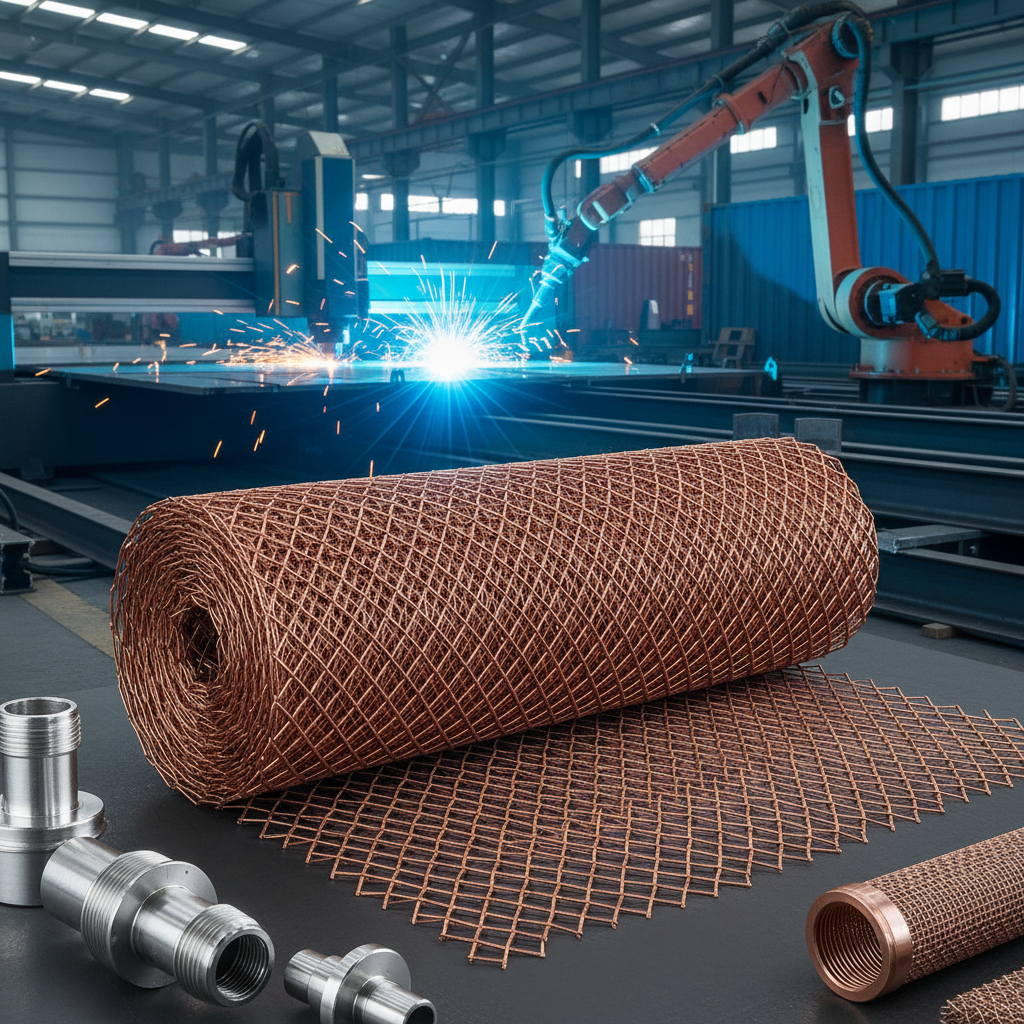
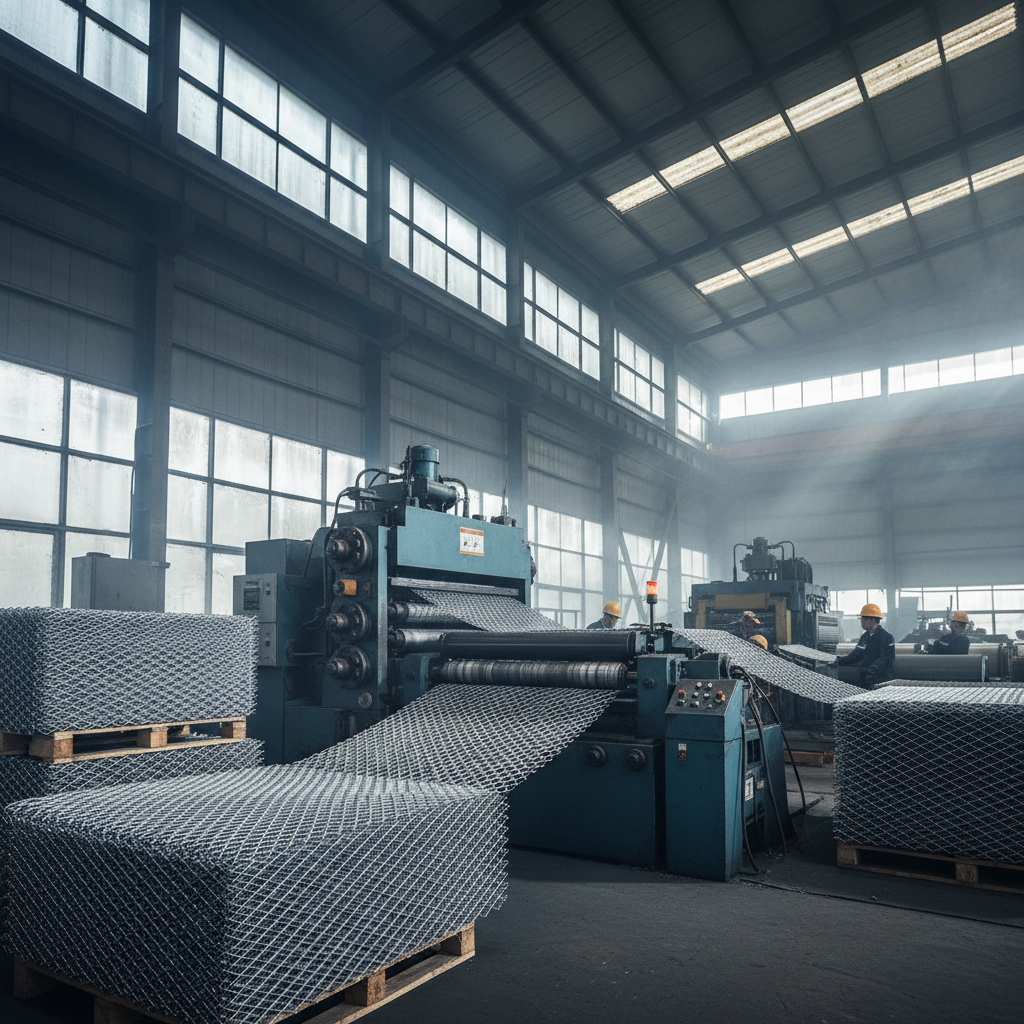
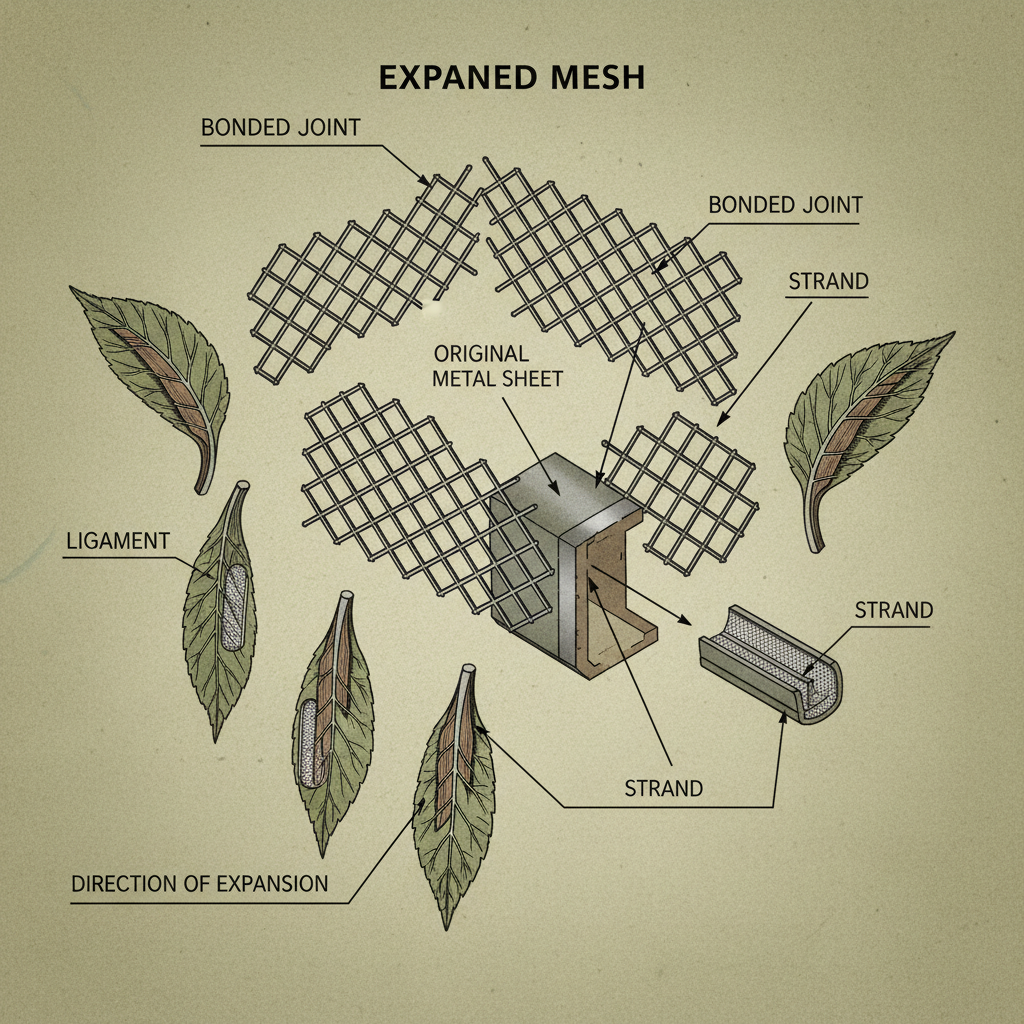
At its core, expanded copper mesh is produced through a simultaneous slitting and stretching process. Unlike woven wire mesh, where wires are interlaced, expanded metal is created from a single sheet of copper. The material is cut with a specific pattern and then stretched, which opens up diamond-shaped apertures. This results in a monolithic structure with no welds or joints, which significantly enhances its mechanical strength and electrical continuity.
This unique manufacturing method ensures that the conductive path remains unbroken throughout the mesh. In the context of modern humanitarian and industrial needs, this means the material can be used in critical safety grounding systems where any break in the circuit could lead to catastrophic failure. The "expansion" not only creates the mesh pattern but also adds a degree of rigidity to the copper, which is naturally more ductile than steel.
From a metallurgical perspective, the purity of the copper used—often C11000 electrolytic tough pitch copper—determines the efficiency of the mesh. When specified as expanded copper mesh, the focus is typically on the balance between the strand width and the opening size, allowing users to tailor the "opacity" of the mesh to the specific frequency of the electromagnetic waves they intend to block.
Key Performance Factors of Copper Expansion
One of the primary drivers for selecting expanded copper mesh is its exceptional electrical conductivity. Copper is second only to silver in conductivity, and the expanded structure ensures that current can flow across the surface with minimal resistance. This makes it ideal for EMI/RFI shielding where the goal is to create a Faraday cage that protects internal circuitry from external noise.
Structural scalability is another critical factor. Because the mesh can be produced in various gauges and expansion ratios, it can be scaled from delicate filters used in laboratory settings to heavy-duty grounding grids in industrial power plants. The ability to maintain a consistent aperture size across large surface areas ensures that the performance of the expanded copper mesh remains predictable regardless of the installation scale.
Finally, corrosion resistance and thermal efficiency play a vital role. While copper naturally develops a patina, it remains highly conductive. In heat-intensive environments, the expanded copper mesh acts as an efficient heat sink, distributing thermal energy across its network of strands. This dual-functionality—shielding and cooling—reduces the need for additional components, thereby lowering the overall system weight and complexity.
Global Applications and Strategic Use Cases
The practical application of expanded copper mesh spans across diverse global industries. In the aerospace sector, it is frequently used in the lining of avionics bays to prevent electromagnetic interference from disrupting flight controls. Similarly, in the medical field, MRI rooms and high-sensitivity diagnostic equipment utilize these meshes to isolate the environment from external electronic noise, ensuring the accuracy of life-saving scans.
Beyond high-tech labs, this material is essential in remote industrial zones for lightning protection and grounding systems. In areas prone to severe electrical storms, expanded copper grids are embedded in concrete or installed as perimeter shields to redirect high-voltage surges safely into the earth. This application highlights the material's reliability in extreme conditions where failure is not an option.
Performance Comparison of Expanded Copper Mesh Variations
Tangible Advantages and Long-Term Value
Investing in expanded copper mesh offers significant long-term economic and operational value. From a cost-efficiency standpoint, the expansion process uses less raw material than solid plating to cover the same surface area, reducing material costs without sacrificing the required electrical properties. Furthermore, the monolithic nature of the mesh eliminates the need for expensive welding or soldering at the joints, reducing labor costs during installation.
Beyond the balance sheet, there is an emotional and ethical dimension to its use: safety and trust. In industrial environments, the reliability of grounding and shielding directly impacts the safety of the workforce. By using a high-quality expanded copper solution, companies ensure a stable environment that protects both the human operator and the expensive machinery. This commitment to quality fosters a culture of innovation and reliability, providing peace of mind to stakeholders and end-users alike.
Future Trends in Copper Mesh Innovation
The future of expanded copper mesh is being shaped by the transition to green energy and the digital transformation of industry. As electric vehicle (EV) charging infrastructures proliferate, there is an increasing need for high-capacity grounding meshes that can handle massive power loads while remaining compact. We are seeing a trend toward hybrid alloys—copper blended with small percentages of other metals—to enhance strength while maintaining conductivity.
Automation and AI-driven manufacturing are also refining the expansion process. Precision laser cutting combined with automated stretching allows for "variable density" meshes, where the aperture size changes across a single sheet to meet different shielding requirements in different zones of a device. This level of customization reduces waste and optimizes the weight-to-performance ratio.
Sustainability is another driving force. The copper industry is moving toward more circular economy models, increasing the use of recycled high-purity copper in the production of expanded mesh. This not only reduces the carbon footprint of the manufacturing process but also ensures a more stable supply chain in an era of volatile raw material pricing.
Overcoming Implementation Challenges
Despite its benefits, implementing expanded copper mesh is not without challenges. One common issue is the susceptibility of copper to oxidation in highly corrosive saline or acidic environments. While the conductive properties remain, the aesthetic degradation can be a concern for architectural applications. The solution lies in advanced surface treatments, such as thin-film nickel plating or specialized clear-coat lacquers, which protect the copper without insulating it.
Another hurdle is the difficulty in achieving perfect flatness in very thin gauges. Because the material is stretched, it can develop "spring-back" or slight warping. Professional fabricators overcome this by utilizing precision flattening rollers and customized jigs during the installation process, ensuring that the mesh integrates seamlessly with other components in a tight-tolerance assembly.
Finally, specifying the correct mesh density is often a point of failure in the design phase. An overly open mesh may allow high-frequency interference to leak through, while a mesh that is too dense may restrict necessary airflow. Expert consultation and the use of simulation software are now standard practice to ensure the chosen expanded copper mesh specification perfectly balances shielding effectiveness with ventilation.
Technical Analysis of Expanded Copper Mesh Specifications
| Material Grade |
Expansion Ratio |
Conductivity Score |
Primary Application |
| C11000 Pure Copper |
Medium (1:2) |
9.8/10 |
High-end EMI Shielding |
| C10100 Oxygen-Free |
Fine (1:1.5) |
10/10 |
Medical Imaging/MRI |
| Cu-Ni Alloy |
Heavy (1:3) |
7.5/10 |
Marine Environment Grounding |
| Recycled Grade A |
Standard (1:2) |
9.2/10 |
General Industrial Filtration |
| Plated Copper |
Ultra-Fine (1:1.2) |
8.8/10 |
Aerospace Avionics |
| Industrial Tough Pitch |
Coarse (1:4) |
9.0/10 |
Lightning Protection Grids |
FAQS
The primary difference lies in the manufacturing process. Expanded copper mesh is created by slitting and stretching a single sheet of metal, resulting in a monolithic structure with no joints. Woven mesh is made by interlacing individual wires. This makes expanded mesh generally stronger, more lightweight for the same coverage, and provides superior electrical continuity because there are no weld points or overlaps that can create resistance.
Yes, it can, but it requires consideration of the environment. While copper is naturally corrosion-resistant, it will develop a green patina over time. For outdoor applications where aesthetics or extreme corrosion resistance (like saltwater) are concerns, we recommend choosing a nickel-plated or tin-plated expanded copper mesh. This maintains the conductivity while adding a protective barrier against the elements.
The rule of thumb for EMI shielding is that the apertures should be significantly smaller than the wavelength of the interference you are trying to block. For higher frequency (shorter wavelength) signals, a finer mesh with smaller openings is required. We suggest consulting with a shielding engineer to match the mesh's "open area" percentage with the specific frequency range of your electronic equipment.
In most cases, yes. Because the expansion process creates an open structure, you use significantly less copper by weight to cover the same square footage compared to a solid sheet. Additionally, it eliminates the need for drilling ventilation holes—which is a costly secondary process—since the mesh is naturally breathable. This reduces both material and labor costs.
Stainless steel is harder and more resistant to physical abrasion and chemical corrosion. However, copper is far superior in electrical and thermal conductivity. If your priority is structural strength in a harsh chemical environment, stainless steel is better. But if the primary function is electrical shielding or grounding, expanded copper mesh is the industry standard due to its unmatched conductivity.
Absolutely. Since it starts as a sheet, it can be cut to specific dimensions, rolled into cylinders, or stamped into custom shapes. Because it is a ductile metal, it can be formed using standard metal-bending techniques. We provide custom slitting and stretching to meet specific strand widths and aperture requirements for tailored industrial projects.
Conclusion
The technical versatility of expanded copper mesh makes it a cornerstone of modern electrical engineering and industrial safety. By seamlessly merging high electrical conductivity with a lightweight, breathable structure, it solves the age-old conflict between shielding effectiveness and thermal management. From the precision required in MRI rooms to the ruggedness needed for industrial grounding, this material continues to prove its value as an efficient, scalable, and reliable solution.
As we move toward an increasingly electrified and connected future, the role of advanced copper products will only expand. We encourage engineers and procurement managers to look beyond standard materials and explore the custom possibilities that expanded architectures offer. By optimizing material choice today, you can ensure the longevity, safety, and efficiency of your infrastructure for decades to come. Visit our website for more information: www.ccmetalmesh.com